
Biofuels are steadily becoming more prevalent as a means of energy. Recently, states like Minnesota, Illinois and New York have passed legislation to encourage their use. And the food and agriculture industries are right at the epicenter of this growing trend. Corn was used to produce over 15 billion gallons of ethanol in the U.S. in 2016, and in 2015, Americans used a record 2.1 billion gallons of biodiesel, a biofuel made from soybeans.
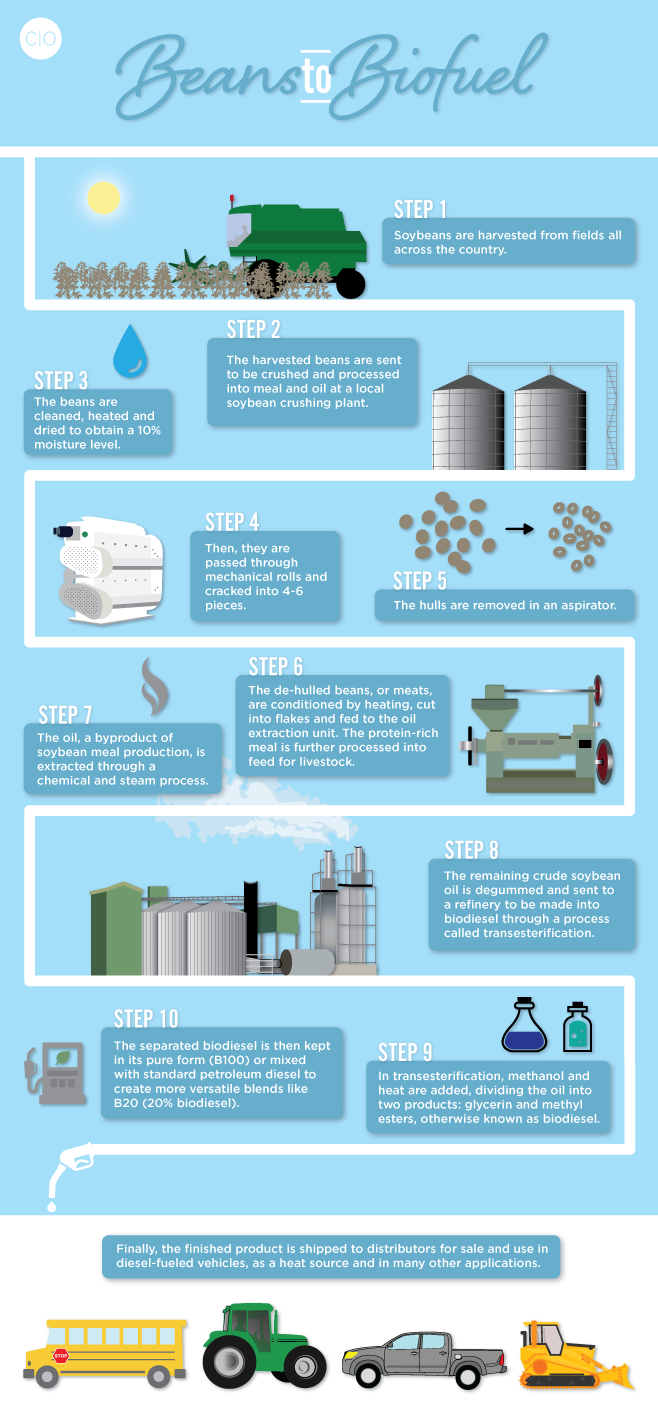
But how does a seed become fuel? Check out the infographic below to follow one food source’s journey as we show you how a soybean becomes biodiesel, an advanced biofuel.
C|O Insight
Almost every industry is currently on a quest for sustainability, and fuel is no different. As biodiesel continues to grow in popularity, the journey from harvest to energy source becomes even more important. It will be very exciting to see where – and how far – this new fuel will take us.
Interested in how emerging issues can impact your business? Contact Mark Gale at mgale@co-nxt.com or call 262.563.5100.
C.O.nxt Insight.
Our team of subject matter experts focuses on food and agriculture—farm field to processing to entrée on a plate. We can help you build a new brand, protect an old one or target customers to foster sales. Let’s talk when the time is right to handle your next strategic marketing and communications challenge: Brittany Steuer, bsteuer@co-nxt.com.
SHARE THIS STORY
The Six Weeks That Quietly Set Your Whole Year.
Plot tours and dealer meetings are the highest-stakes marketing moment in the seed calendar. Most regional brands still treat them as field events. That gap is the opportunity. From late August through October, the


